
Logo

Dental Bridges: Types, Benefits, Procedure, and Aftercare Explained

What Are Dental Bridges?

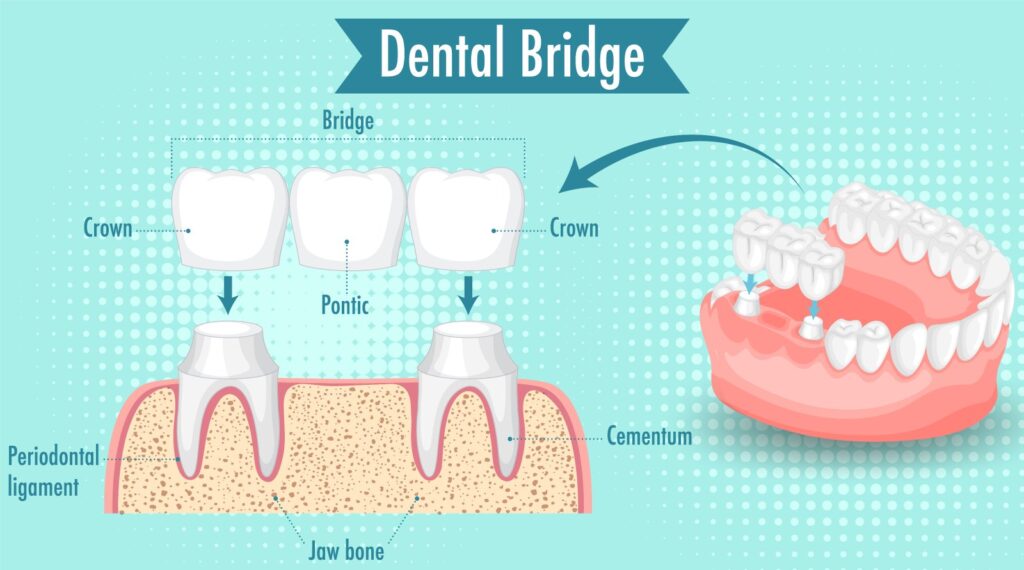
Dental bridges are a common way to replace missing teeth. They fill the gap where one or more teeth are missing. A dental bridge uses nearby teeth for support. Because of this, it helps restore your smile and chewing ability. According to the American Dental Association (ADA), dental bridges are safe and effective for most people. Many people choose dental bridges because they look and feel natural.

Types of Dental Bridges

There are several types of dental bridges. Each type works best in different situations. Here are the main types:

  • Traditional Bridge: This is the most common type. It uses crowns on the teeth next to the gap.
  • Cantilever Bridge: This bridge uses a crown on only one side of the gap.
  • Maryland Bridge: This type uses a metal or porcelain frame attached to the back of nearby teeth.
  • Implant-Supported Bridge: This bridge uses dental implants instead of natural teeth for support.
  • Each type has its own benefits. Your dentist will help you choose the best one for your needs.

    Benefits of Dental Bridges

    Dental bridges offer many benefits. For example, they can:

  • Restore your smile and confidence
  • Help you chew and speak better
  • Keep your face shape natural
  • Prevent other teeth from shifting
  • In addition, dental bridges are fixed in place. This means you do not remove them like dentures. As a result, many people find them easy to use and care for.

    The Dental Bridge Procedure

    The dental bridge procedure usually takes two or more visits. Here is a step-by-step guide:

  • Consultation: First, your dentist checks your teeth and discusses your options.
  • Preparation: Next, the dentist shapes the nearby teeth. This makes space for the crowns.
  • Impression: Then, the dentist takes a mold of your teeth. This helps create a custom bridge.
  • Temporary Bridge: While your bridge is made, you may get a temporary one.
  • Fitting: Once ready, your dentist fits and adjusts the new bridge.
  • Final Placement: Finally, the bridge is cemented in place.
  • Because each mouth is different, your dentist may adjust these steps for your needs.

    Aftercare and Maintenance Tips

    Proper care helps your dental bridge last longer. Here are some helpful tips:

  • Brush your teeth twice a day with a soft brush
  • Floss daily, especially under the bridge
  • Use a special floss threader or water flosser
  • Visit your dentist for regular check-ups and cleanings
  • Avoid very hard or sticky foods
  • With good care, dental bridges can last 5 to 15 years or even longer. However, regular dental visits are important for keeping your bridge and mouth healthy.

    Potential Risks and Complications

    While dental bridges are safe, some risks exist. For instance, you may notice:

  • Sensitivity in the teeth or gums
  • Bridge becoming loose or falling out
  • Decay under the crowns if not cleaned well
  • Gum irritation or infection
  • However, most problems can be prevented with good oral care and regular dental visits. If you notice pain or the bridge feels loose, contact your dentist right away.

    Frequently Asked Questions

  • How long do dental bridges last?
  • With proper care, dental bridges can last 5 to 15 years or more.
  • Does the dental bridge procedure hurt?
  • Your dentist uses numbing medicine, so you should feel little to no pain.
  • What is the cost of dental bridges?
  • The cost varies based on the type and number of teeth. Ask your dentist for an estimate.
  • Can I eat normally with a dental bridge?
  • Yes, but avoid very hard or sticky foods to protect your bridge.
  • How do I clean under my dental bridge?
  • Use a floss threader or water flosser to clean under the bridge every day.
  • In summary, dental bridges are a reliable way to replace missing teeth. They can help you eat, speak, and smile with confidence. Consult at KK Dental to find out if a dental bridge is right for you.